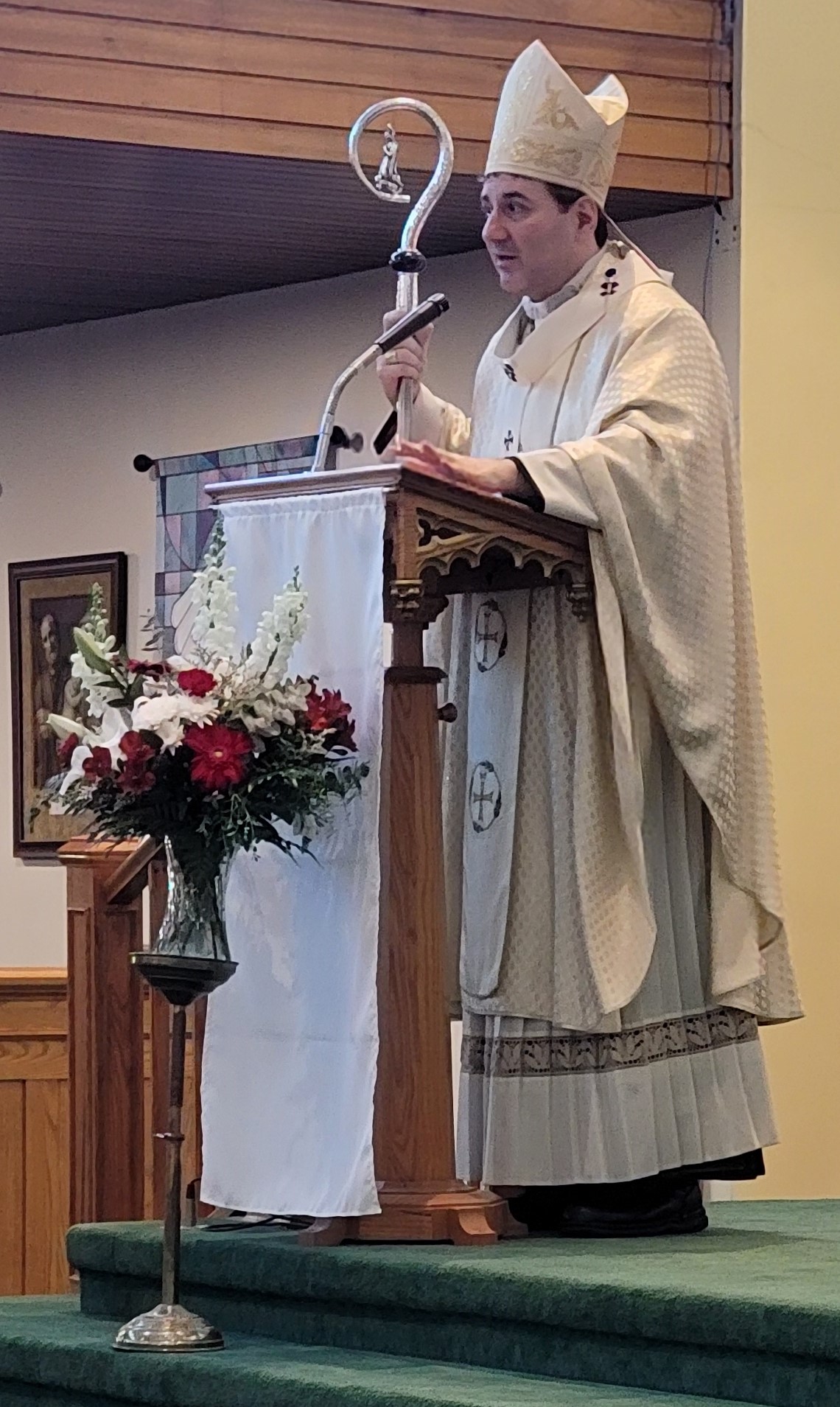
Cardinal Leo - Lenten Message 2026
My Dear Brothers and Sisters,
May Jesus and Mary be in your hearts.
As we enter into the holy season of Lent, I would like to share some words of spiritual nourishment and encouragement. Each year, while Ash Wednesday emphasizes repentance, prayer, fasting, and almsgiving, on the First Sunday of Lent especially, we are invited to pursue our journey of faith into the desert with Christ. However, it is not a solitary journey, nor are the three Lenten practices purely a “private affair”. Sacred Scripture and Sacred Tradition teaches us that God never saves individuals in isolation, rather, he gathers a people to himself (cf. Lumen Gentium, 9). Recently, the universal Church has reflected on the meaning of synodality and emphasized the ecclesial and social togetherness of our journey together to God, thus recalling the importance of the community in the salvific plan of God (cf. CCC 781). With this in mind, I would ask us to consider how Lent is not only about our personal conversion but also the healing and renewal of our relationship with God and one another. We would do well to ask ourselves: how do we live Lent together?
Conversion or repentance is frequently framed within the context of individual acts such as sacramental confession, penance, self-denial or acts of prayer, fasting and almsgiving. The Old Testament already understood the human person within the context of the community which is very different from the modern understanding of a radical individualism. The Hebrew Scriptures, in fact, narrate a strong sense of community and its fidelity or sinfulness in the eyes of God. This is because from the beginning, God relates to Israel as a collective body (cf. Ex 6:7). Sin is never merely a private act because the covenant binds people together, and one person’s infidelity affects the whole body. Fidelity and infidelity are corporate realities. In this way sin, though personal, is likewise always social inasmuch as it always wounds the Body. And conversion, if it is real, always restores relationships. Lent teaches us that to return to the Lord is also to return to one another, and journey together.
Today, many experience the social or communal fragmentation caused by sin: families strained by silence or envy, communities divided by fear or resentment, parishes weakened by absence or disengagement. We may live or work in close proximity to others and yet carry unspoken distances in our hearts. Lent invites us to name this reality honestly—not to assign blame, but to seek healing and forgiveness. The call of the Gospel is not simply “to be better,” but “to be reconciled” (cf. 2 Cor 5:20). Part and parcel of our journeying together is the experience of authentic and daily conversion, both personal and communal, embodied beautifully in the Sacrament of Reconciliation. While Confession is deeply personal, it is never private because sin wounds not only our relationship with God but also our communion with the Church (cf. CCC, 1440; 2 Cor 5:18–20).
2
Through the Sacrament of Reconciliation, we restore not only our friendship with God but our bonds within the community—a ministry Our Lord entrusted to the apostles (cf. Jn 20:22–23; CCC, 1443–1445). Through this sacrament, the Lord repairs the bonds we have weakened—with him and with one another—and teaches us again the language of mercy and love (cf. CCC, 1468–1469; St. Ambrose, On Repentance, I.15). Our Lenten practices culminate on Easter Sunday when our conversion is publicly proclaimed and personally reclaimed as we renew our Baptismal vows, rejecting evil and confessing our belief in the One God—Father, Son, and Holy Spirit—through whom we were reborn into new life (cf. Rom 6:3–11; CCC, 1213, 1262).
Traditional Lenten practices take on deeper meaning when seen through the lens of our communion with God and one another (cf. CCC, 1434-1435). How? Prayer opens our hearts to God who unites us to him and to others, as Jesus himself prays that all may be one in the communion he shares with the Father (cf. Jn 17:20–23; CCC, 2564). Fasting teaches us to make room for God and for one another by reordering our priorities, and restoring justice and communion (cf. Is 58:6–7; Joel 2:12–13; St. Basil the Great, Homily on Fasting, 1). Almsgiving is a concrete act of solidarity, a recognition that my life is bound to the life of my neighbour, and my love cannot remain abstract but must be expressed in deeds (cf. 1 Jn 3:16–18; CCC, 2447).
The road to Jerusalem that Jesus walks is not a path done in isolation; he gathers disciples, eats with sinners, heals the broken, and calls the lost by name as He sets His face toward Calvary (Lk 9:51–19:27). Even as Jesus carried his cross, was crucified, and breathed his last, he remained focused on others and the mission entrusted to him by the Father (Mk 15:21, Lk 23:27-31; Mt 27:46-50, Lk 23:44-46; cf. Lk 2:35). To follow Jesus is to allow our own journey of repentance to become a journey of renewed communion (Lk 24:13–35; CCC, 781).
As we begin this Lenten season, we pray for the grace not only of conversion, but for the healing of our relationships; not only to examine our consciences, but to rebuild communion; not only to walk toward Easter individually, but to arrive there together. For it is together—as one Body in Christ—that we are led from the desert to the joy of the Resurrection. May the Blessed Mother be our inspiration, guide, model and companion on this journey of spiritual and social renewal.
Cardinal Leo - Lenten Message 2026